Free US stock working capital analysis and operational efficiency metrics to understand business quality. We analyze the efficiency of how companies manage their operations and convert revenue into cash. A recent NPR discussion examined two critical societal challenges: the potential for Chinese artificial intelligence to address economic inequality, and the growing financial risks posed by dementia. The segment highlighted how these seemingly separate issues intersect, particularly as AI systems are increasingly deployed in financial services and elder care.
Live News
A recent NPR feature explored the dual themes of Chinese AI’s capacity to reduce inequality and the financial toll of dementia. The discussion noted that China has invested heavily in AI development, aiming to use technology to bridge income gaps and provide public services more efficiently. However, the report also raised questions about whether AI could inadvertently exacerbate inequality if access or benefits remain uneven.
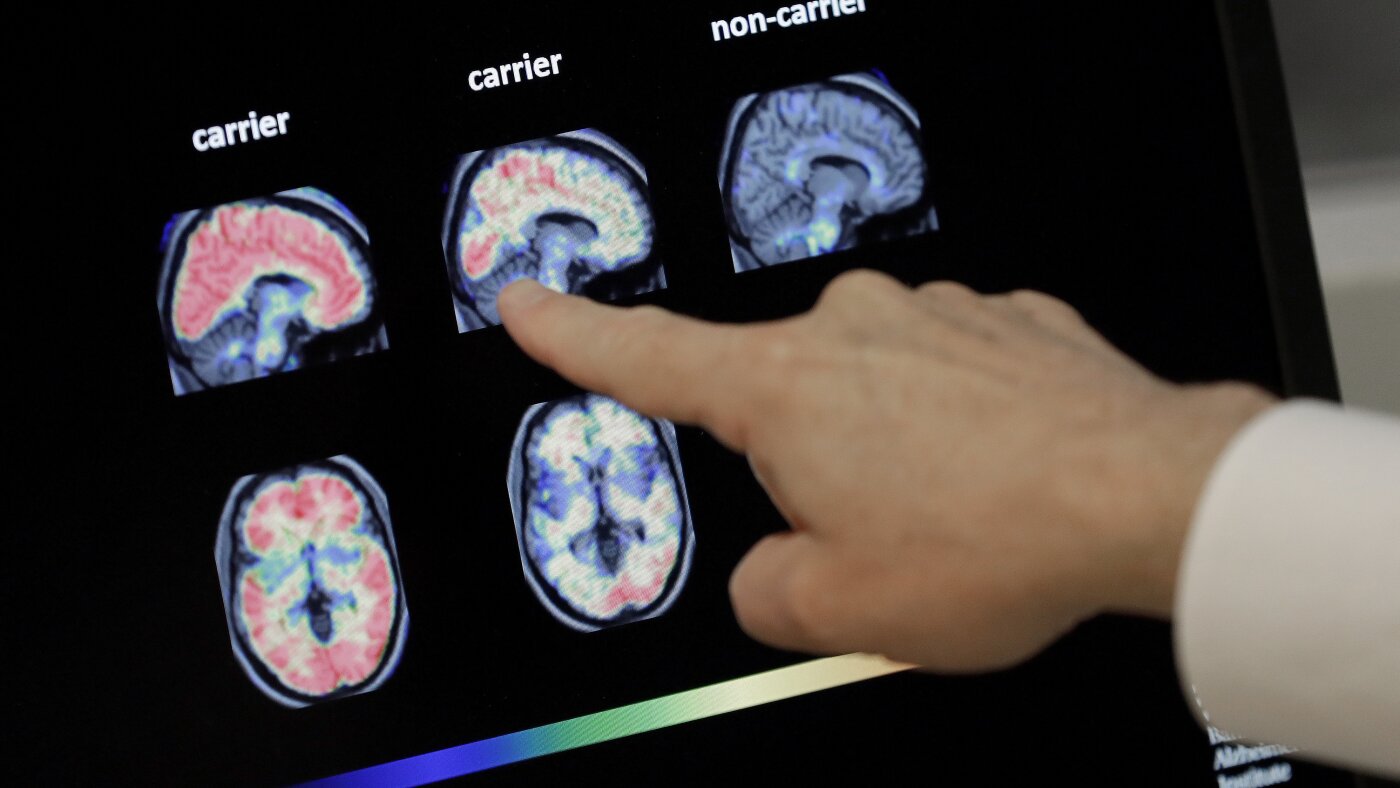
On the dementia front, the segment highlighted the gradual cognitive decline that can lead to significant financial mismanagement. As the global population ages, untreated dementia symptoms may result in missed bill payments, susceptibility to scams, or poor investment decisions. The NPR piece underscored that banks and financial institutions are only beginning to develop tools to detect early warning signs.
No specific earnings data or corporate announcements were cited in the discussion, as the focus was on broader societal implications rather than individual company performance.
Chinese AI and Dementia: Exploring Technology’s Role in Financial VulnerabilityThe integration of AI-driven insights has started to complement human decision-making. While automated models can process large volumes of data, traders still rely on judgment to evaluate context and nuance.Real-time data analysis is indispensable in today’s fast-moving markets. Access to live updates on stock indices, futures, and commodity prices enables precise timing for entries and exits. Coupling this with predictive modeling ensures that investment decisions are both responsive and strategically grounded.Chinese AI and Dementia: Exploring Technology’s Role in Financial VulnerabilityReal-time updates allow for rapid adjustments in trading strategies. Investors can reallocate capital, hedge positions, or take profits quickly when unexpected market movements occur.
Key Highlights
- Chinese AI initiatives aim to leverage machine learning for public services and resource allocation, potentially reducing inequality in healthcare, education, and financial access.
- Dementia’s impact on financial decision-making is a growing concern, with estimates suggesting millions of older adults may be at risk of losing savings or facing exploitation.
- The intersection of these topics raises questions about whether AI can help identify cognitive decline early, allowing families and financial advisors to intervene before significant harm occurs.
- Critics note that AI systems themselves can be biased, and if not carefully designed, they might widen existing disparities rather than close them.
- Financial regulators in several regions have begun exploring guidelines for AI use in banking, particularly regarding vulnerable populations.
- The NPR segment did not provide specific statistics or case studies, focusing instead on the conceptual challenges and potential policy responses.
Chinese AI and Dementia: Exploring Technology’s Role in Financial VulnerabilityMarket participants often refine their approach over time. Experience teaches them which indicators are most reliable for their style.Some investors rely on sentiment alongside traditional indicators. Early detection of behavioral trends can signal emerging opportunities.Chinese AI and Dementia: Exploring Technology’s Role in Financial VulnerabilityObserving correlations between markets can reveal hidden opportunities. For example, energy price shifts may precede changes in industrial equities, providing actionable insight.
Expert Insights
The NPR discussion did not include named experts or proprietary research, but the themes align with broader academic and policy debates. Some analysts suggest that AI-driven monitoring of spending patterns could offer early alerts for cognitive decline, though privacy concerns remain significant. Others caution that over-reliance on AI in financial planning may disadvantage individuals who lack digital literacy—potentially the same groups most vulnerable to inequality.
In the context of Chinese AI, observers note that the country’s state-led approach allows for rapid deployment of large-scale systems, but transparency and accountability mechanisms are still evolving. The potential for AI to reduce inequality rests on whether it can be deployed equitably, a question that remains unresolved.
For investors and financial institutions, these developments suggest a long-term shift toward more personalized risk assessment tools. However, without specific data or regulatory guidance, the near-term impact on financial markets is uncertain. The NPR segment serves as a reminder that technology’s role in society carries both promise and peril, particularly when addressing complex human vulnerabilities.
Chinese AI and Dementia: Exploring Technology’s Role in Financial VulnerabilityTrading strategies should be dynamic, adapting to evolving market conditions. What works in one market environment may fail in another, so continuous monitoring and adjustment are necessary for sustained success.Combining technical analysis with market data provides a multi-dimensional view. Some traders use trend lines, moving averages, and volume alongside commodity and currency indicators to validate potential trade setups.Chinese AI and Dementia: Exploring Technology’s Role in Financial VulnerabilityMarket behavior is often influenced by both short-term noise and long-term fundamentals. Differentiating between temporary volatility and meaningful trends is essential for maintaining a disciplined trading approach.